The Future of Market Analysis: Artificial Intelligence and Economic Trend Predictions
Transformative Impact of AI on Market Analysis
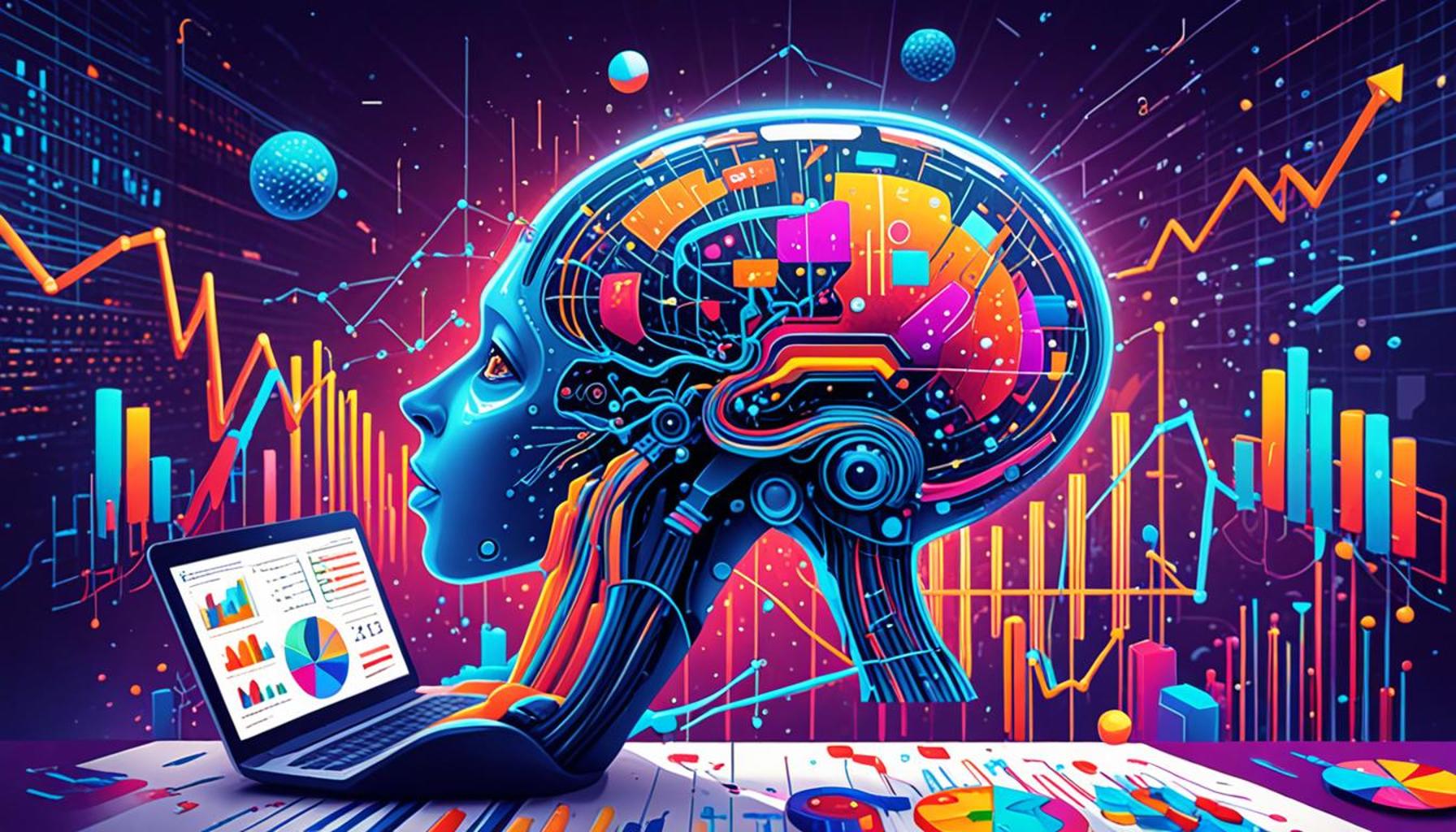
The integration of artificial intelligence (AI) into market analysis represents a significant evolution in how businesses approach economic forecasting. With the ability to analyze complex datasets rapidly, AI systems are redefining traditional analytical methods. This transformation is critical for companies aiming to remain competitive in an unpredictable economy, enabling them to derive actionable insights that enhance overall operational strategies.
Among the key benefits of implementing AI in market analysis, data analysis speed stands out prominently. Conventional data processing techniques often involve lengthy periods of human oversight and manual entry, leading to potential delays in acquiring vital business intelligence. In contrast, AI tools can instantly process enormous datasets, providing businesses with real-time insights. For instance, large retailers can quickly analyze customer purchasing patterns during holiday sales, allowing them to promptly adjust inventory and promotions based on immediate demand.
Predictive modeling is another advantage offered by AI technologies. Through machine learning algorithms, organizations gain the capability to forecast future market trends with impressive accuracy. For example, financial institutions utilize AI to detect market anomalies and predict stock price movements, thus enhancing trading strategies and investment decisions. This predictive capability is significantly beneficial as it enables businesses to prepare for potential market shifts, minimizing risks associated with economic downturns or sudden surges in demand.
Moreover, AI’s influence extends to enhanced decision-making. Businesses that effectively leverage AI-driven insights can make more informed strategic choices. By utilizing data derived from consumer behaviors and market trends, organizations can identify lucrative opportunities and efficiently allocate resources. An example of this can be seen in the healthcare sector, where AI aids hospitals in optimizing patient care solutions based on predictive analytics, ensuring that services align with community health needs and operational capabilities.
Within the United States, sectors such as finance, retail, and healthcare are at the forefront of adopting AI for market analysis. For instance, major retail giants are employing AI tools to understand consumer behavior by analyzing feedback from social media and online purchasing habits. This data helps organizations rapidly adjust marketing strategies to align with emerging consumer preferences.
Furthermore, AI enables companies to optimize supply chains. By employing predictive analytics, organizations can anticipate supply shortages or delays and adjust their operations accordingly. This can significantly reduce costs and enhance service delivery. For example, during unforeseen events such as natural disasters or global pandemics, AI can provide crucial insights to quickly reallocate resources or adjust logistics to meet changing demand.
Finally, AI’s role in forecasting economic indicators cannot be understated. Policymakers and businesses rely on accurate economic forecasts to make critical decisions, and with AI’s predictive power, the anticipation of economic shifts has become more reliable. Such advancements empower leaders to craft proactive policies and business strategies that foster economic resilience.
As we look to the future, it is clear that AI technologies will continue to redefine economic forecasting, providing the tools necessary for businesses to navigate the complexities of an ever-evolving market landscape. Embracing these technologies will be essential for organizations seeking to thrive in the competitive environment of the 21st century.
DISCOVER MORE: Click here to find out how to embrace mindfulness
Emerging Trends in AI-Driven Market Analysis
The incorporation of artificial intelligence (AI) in market analysis is not merely a trend; it represents a paradigm shift that is set to redefine how companies interpret data and predict economic trends. One of the most striking emerging trends is the utilization of advanced algorithms that facilitate more nuanced understanding of consumer behavior. By leveraging vast pools of consumer data—such as online interactions, purchasing history, and social media feedback—businesses can develop highly targeted marketing strategies. This capability enables firms to tailor their offerings in real time, aligning product availability and marketing messages with evolving consumer preferences.
Another pivotal trend is the rise of automated data collection and analysis. Traditional market research methods often rely on surveys and focus groups, which can be time-consuming and subject to biases. In contrast, AI systems employ web scraping, natural language processing, and sentiment analysis to gather insights from a multitude of sources, including blogs, forums, and news articles. This approach not only accelerates the data collection process but also enriches analytical depth, empowering businesses to identify emerging market sentiments and trends with unprecedented speed.
Moreover, we observe a significant advancement in the capability of real-time analytics. The demand for swift decision-making in competitive markets is prompting businesses to enhance their data infrastructures. AI systems that provide continuous stream analysis allow organizations to spot real-time shifts in consumer preferences, economic indicators, and competitor movements. These insights facilitate more agile business strategies, which are vital for navigating volatile market conditions.
Organizations that wish to capitalize on these advancements can consider the following strategies:
- Investment in AI Technologies: Businesses should prioritize investment in AI technologies that align with their strategic goals. This encompasses not just machine learning platforms, but also cloud infrastructure that supports large-scale data analysis.
- Training and Development: To maximize the benefits of AI tools, companies must invest in training their workforce. Equip teams with the skills to interpret AI-generated insights effectively, ensuring they can leverage this technology to drive decision-making.
- Integration of AI with Existing Systems: Efforts should be made to integrate AI solutions with existing analytical systems. This creates a seamless workflow that enhances data sharing and analysis across departments.
- Collaboration with Data Scientists: Engaging with data specialists and AI experts can provide invaluable insights that help organizations better understand the complexities of AI and machine learning.
Additionally, as AI technologies continue to advance, they will increasingly facilitate cross-industry applications. Fields such as real estate, automotive, and travel are beginning to adopt AI-driven insights to predict market shifts. For instance, real estate firms leverage AI to assess property values by analyzing location trends, demographic shifts, and economic forecasts, enabling them to make more informed investment decisions.
As AI becomes more sophisticated, it will also enhance the ability of businesses to conduct scenario planning. By simulating different economic environments, companies can assess potential risks and opportunities, allowing for strategic preparedness in the face of uncertainty. This capability is particularly crucial given the rapid pace of technological advancement and the unpredictable nature of today’s global economy.
In conclusion, the evolution of market analysis through AI technologies is just beginning. As businesses adopt these advanced tools and methodologies, they will uncover deeper insights, enabling them to navigate economic landscapes with greater resilience and precision.
DISCOVER MORE: Click here to dive deeper
The Role of Predictive Analytics in Market Forecasting
The integration of predictive analytics powered by AI has revolutionized the landscape of market analysis, offering businesses unprecedented capabilities to anticipate economic shifts. Employing statistical algorithms and machine learning techniques, predictive analytics enables firms to forecast future trends based on historical data and current market conditions. This is particularly valuable in sectors such as retail, finance, and healthcare, where understanding consumer behavior and economic indicators can significantly impact profitability.
One of the core applications of predictive analytics is in the realm of demand forecasting. By utilizing AI tools, companies can analyze patterns in consumer purchases, seasonal trends, and macroeconomic variables to optimize inventory management. For example, retailers can utilize AI algorithms to predict which products will be in high demand during specific seasons or events, such as Black Friday or the holiday season. Accurate demand forecasting minimizes overstock and stockouts, ultimately leading to enhanced customer satisfaction and improved revenue streams.
Moreover, sentiment analysis plays a crucial role in shaping marketing strategies and product development. By analyzing consumer feedback across social media platforms and review sites, predictive analytics can assess public sentiment regarding particular brands or products. Companies can leverage these insights to align their offerings with consumer expectations, identify potential concerns before they escalate, and maintain a competitive edge in the marketplace. In the US, brands such as Amazon utilize sentiment analysis to refine their recommendations and product positioning, resulting in higher conversion rates.
The Impact of Automation on Market Research
As AI technologies evolve, the automation of market research processes is becoming increasingly prevalent. Automated tools can now collect, analyze, and report market data without the need for extensive human intervention. This not only speeds up research cycles but also reduces the risk of human error, ensuring more reliable insights. Researchers can redirect their focus towards interpreting results and strategizing based on the data provided by automated systems.
For instance, startups leveraging machine learning models can launch products faster by utilizing automated market research. Companies such as SurveyMonkey have developed AI-powered survey platforms that synthesize responses in real-time, allowing organizations to gauge market readiness and customer interest effectively. By leveraging such technologies, businesses can pivot on their strategies based on immediate feedback, adapting quickly to market dynamics.
Ethical Considerations and Data Privacy
While the advantages of AI in market analysis are profound, it is essential to address potential ethical considerations and data privacy issues that accompany the technology. As organizations harness consumer data to fuel their predictive models, they must also ensure compliance with regulations such as the General Data Protection Regulation (GDPR) and the California Consumer Privacy Act (CCPA). These legal frameworks emphasize the importance of transparency in data use and require organizations to obtain explicit consent from consumers regarding their data collection practices.
Failure to adhere to these regulations can result in significant legal repercussions and damage to a company’s reputation. Thus, businesses must prioritize implementing data governance strategies that protect consumer information while maintaining the integrity of their market analyses. Integrating ethical practices into AI systems will not only safeguard consumer trust but will also enhance the long-term sustainability of AI-driven market analysis.
Ultimately, the future of market analysis will greatly depend on the balance between utilizing AI technologies for business growth while ensuring ethical standards are upheld and consumer privacy is respected. As companies navigate this evolving landscape, the ability to harness the power of AI in a responsible manner will become a hallmark of market leaders.
DISCOVER MORE: Click here to learn about the benefits of regular bath meditation
Conclusion
The future of market analysis is undeniably intertwined with the advancements in artificial intelligence and its capacity to enhance economic trend predictions. Organizations that leverage AI technologies stand to gain a significant competitive advantage, as they can identify and respond to market dynamics with unprecedented agility and precision. The use of predictive analytics enables companies to forecast demand, tailor marketing strategies, and optimize resource allocation, thus driving profitability and efficiency.
However, as we harness these powerful tools, it is crucial to remain vigilant about the ethical implications and data privacy issues that accompany them. Adhering to regulations such as the GDPR and CCPA is essential for building trust with consumers and fostering a sustainable business model. Companies must prioritize transparency and integrity in their data practices to mitigate potential pitfalls that could arise from non-compliance.
In conclusion, the evolving landscape of market analysis serves as both an opportunity and a challenge for businesses. By integrating AI responsibly, organizations can not only enhance their analytical capabilities but also set a precedent for ethical standards in the industry. The successful navigation of this balance will define the future of market analysis, shaping a robust framework for delivering insights that drive strategic decision-making in an increasingly data-driven world. As these technologies continue to mature, businesses must remain proactive in their adaptations to harness the full potential of AI-powered market analysis.